
Code Compliance · 5 min read
Seismic + fire compliance: the dual mandate of hillside rebuilds
Published April 15, 2026
California hillside rebuilds have to satisfy two parallel mandates: the wildland-urban-interface (WUI) fire code, and the seismic + slope-stability requirements that hillside ordinances trigger. They overlap. They occasionally conflict.
Knowing where they collide saves families months and tens of thousands of dollars.
Where the two mandates pull in opposite directions
Non-combustible perimeter vs. setback hardening. WUI requires a 5-foot non-combustible perimeter. Hillside seismic often requires deeper anchor footings + retaining walls inside that same envelope. Plan the wall system to do both jobs.
Vent design vs. attic ventilation. Ember-resistant 1/16" mesh + intumescent baffles restrict free-air flow. Hillside attic ventilation calcs sometimes require larger gross vent areas. The combined assemblies are denser + more expensive than what families assume.
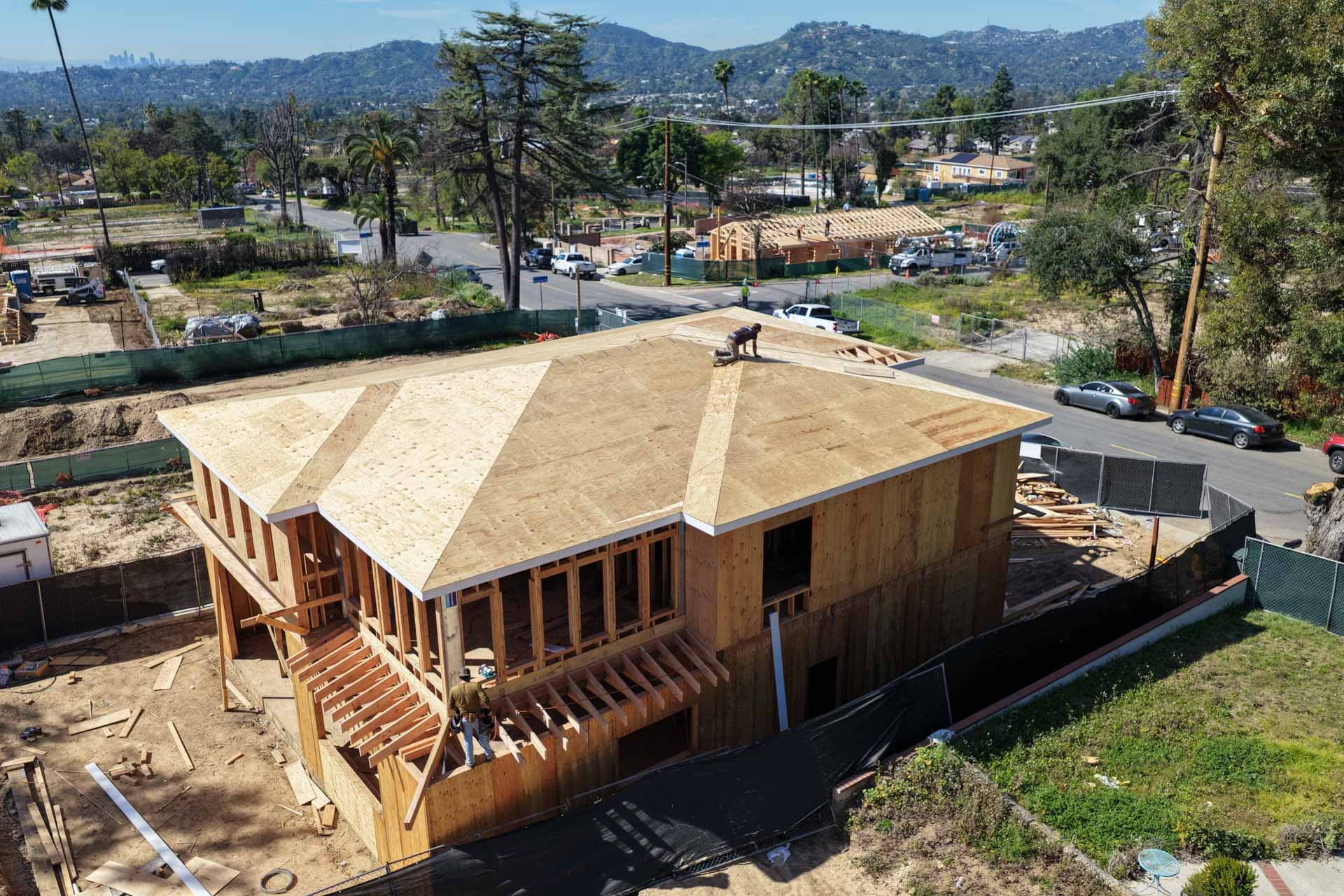
Decks + cantilevers. Hillside lots love cantilevered decks for view; WUI now requires rated assemblies + non-combustible substrate within 10 feet of openings. The deck-as-extension-of-the-house treatment forces design choices early.
Foundation type. Hillside seismic often pushes toward deep caissons or grade beams. Combined with WUI’s requirement for non-combustible perimeter materials, expect higher foundation costs than a flat-lot rebuild.
Where families get blindsided
Soils + geotech report scope. A pre-fire hillside home likely had a geotech report from the original build. Most fire rebuilds need a fresh one — current standards require things the old one didn’t address. Budget $8K–$25K + 4-8 weeks.
Retaining wall permits as separate scope. Walls over 4 feet, or any wall supporting a surcharge, require separate engineering + permitting. Don’t assume they ride on the building permit.
Driveway slope + fire access. LA County Fire requires turnouts and minimum widths for engine access. Steep hillside driveways often need a redesign to pass fire access — even if the old driveway was grandfathered.
Defensible-space conflicts with hillside vegetation rules. Hillside vegetation ordinances protect native plants. Defensible-space rules require removing them within 30 feet of structures. The intersection is messy; plan-check resolves case-by-case.
The good news
Most of the dual-mandate cost is code-upgrade rider eligible. Document carefully and your insurer covers a large chunk of it. See our code-upgrade strategy guide for the playbook.
If you have a hillside lot above the 500-foot contour, book a free consultation. We’ll pull your APN + the relevant overlay layers and walk through what the dual mandate means for your specific parcel before you commit to a designer.