
Funding · 5 min read
California property tax relief after the Palisades fire: Prop 50, Prop 19, and the Assessor’s involuntary-loss filing
Published February 28, 2026
California property taxes are based on the assessed value of the property. When a home burns down, the assessed value should drop — but only if you file the right paperwork. And the rebuild brings a different question: do you keep your old Prop 13 base-year value, or does the rebuild get reassessed?
Two filings matter, and both have deadlines.
Filing 1: Involuntary-loss reassessment (LA County form ADS-820)
What it does: reduces the assessed value of the destroyed structure to zero (or whatever residual the Assessor verifies). Land value stays. Property taxes drop accordingly while the lot sits empty.
Timing: must be filed within 12 months of the disaster. Late filings are often accepted with a written explanation but don’t count on it.
Process: download form ADS-820 from https://assessor.lacounty.gov. Submit with photos of the loss + your insurance claim documentation. The Assessor schedules a site inspection.
Impact: annual property tax savings of $8,000-$40,000 depending on your pre-fire assessed value. Multiplied by 12-24 months of displacement, that’s real money.
Filing 2: Prop 50 base-year value transfer
Prop 50 (1986) — and the related Prop 19 (2020) protections — let you transfer your Prop 13 base-year value to a replacement property after disaster damage. Without this, your rebuild is reassessed at full market value the moment construction completes.
Two scenarios:
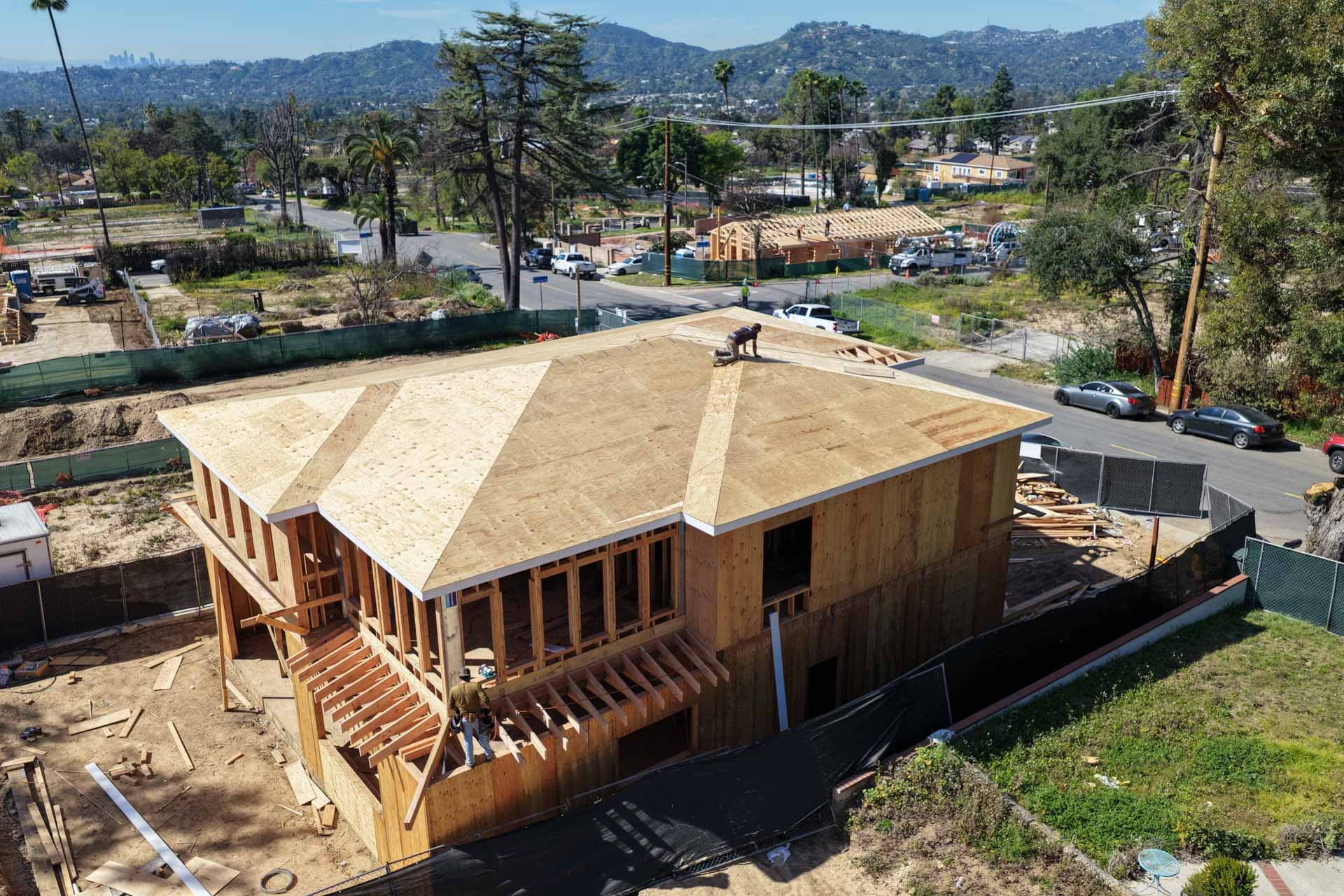
A) Rebuilding on the same lot. Prop 50 protections apply automatically. The rebuilt home gets your original Prop 13 base year value, NOT the new market value. As long as the rebuild doesn’t exceed 120% of the original square footage. If it does, the excess is reassessed at market.
B) Buying a replacement property elsewhere in California. Prop 19 lets you transfer the base-year value to a replacement, but only if the replacement is within California, is purchased within 2 years of the disaster, and is of equal-or-lesser value. Excess value above the original assessment is reassessed.
For Palisades families specifically: the lot in the Palisades is worth $1.5M-$4M alone. If you sell the lot and buy a replacement home elsewhere, the math on Prop 19 transfer is complicated — usually worth a CPA review before deciding.
The 120% rule trap
If your rebuild is more than 120% of the original sqft, the excess gets reassessed at market value. On a Palisades home that was 2,800 sqft, you can rebuild to 3,360 sqft with full Prop 13 protection. A 4,500 sqft rebuild reassesses the extra ~1,100 sqft at market — adding ~$15,000/year in property taxes forever.
Many families don’t realize this until permit-check. Decide on rebuild size with this in mind.
What you actually do
1. File ADS-820 immediately to drop the burned-structure assessment. Document with insurance claim docs + post-fire photos.
2. Plan rebuild square footage with the 120% rule in mind. If you want more sqft than the original 120%, do the math on the property tax delta before committing.
3. If considering a replacement property (not rebuild on the lot): consult a CA-licensed CPA on Prop 19 mechanics before the 2-year window starts ticking.
4. Re-file an assessment appeal if needed. If the Assessor doesn’t adjust to your satisfaction, the LA County Assessment Appeals Board has a process. 60-day deadline from the assessment notice.
Talking to the LA County Assessor early matters. We coordinate with families on Prop 13 / Prop 50 / Prop 19 strategy as part of the rebuild planning — book a free consultation and we’ll walk through your specific numbers.